
 中文
中文 English
 한국어
한국어 日本語
日本語 Español
 Français
 Русский

| Catalog No. | HX012014 | ||||||||
|---|---|---|---|---|---|---|---|---|---|
| Description |
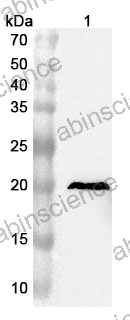
Anti-Human EMP2 Polyclonal Antibody (HX012014) is a rabbit polyclonal antibody detecting Epithelial membrane protein 2; EMP-2; Protein XMP; EMP2; XMP in ELISA, IHC, WB. Suitable for Human.
Highlights
|
||||||||
| Species reactivity | Human | ||||||||
| Applications | ELISA, IHC, WB | ||||||||
| Host species | Rabbit | ||||||||
| Clonality | Polyclonal | ||||||||
| Isotype | IgG | ||||||||
| Immunogen | E. coli - derived recombinant human EMP2 (Ile21-Thr67). | ||||||||
| Target | Epithelial membrane protein 2; EMP-2; Protein XMP; EMP2; XMP | ||||||||
| Endotoxin level | Please contact with the lab for this information. | ||||||||
| Purification | Purified by antigen affinity column. | ||||||||
| Accession | P54851 | ||||||||
| Form | Liquid | ||||||||
| Storage buffer | 0.01M PBS, pH 7.4, 50% Glycerol, 0.05% Proclin 300. Please refer to the specific buffer information in the hardcopy of datasheet or the lot-specific COA. |
||||||||
| Product Usage Information |
| ||||||||
| Stability and Storage | Use a manual defrost freezer and avoid repeated freeze thaw cycles. Store at 2 to 8°C for frequent use. Store at -20 to -80°C for twelve months from the date of receipt. | ||||||||
| Background | Epithelial membrane protein 2 (EMP2) is a ~19 kDa protein. Functions as a key regulator of cell membrane composition by regulating protein surface expression. Also, plays a role in regulation of processes including cell migration, cell proliferation, cell contraction and cell adhesion. Regulates transepithelial migration of neutrophils into the alveolar lumen, potentially via mediation of cell surface expression of adhesion markers and lipid raft formation. Negatively regulates caveolae formation by reducing CAV1 expression and CAV1 amount by increasing lysosomal degradation. Facilitates surface trafficking and formation of lipid rafts bearing GPI-anchor proteins. 1. Gee, HY. et al. (2014) American journal of human genetics 94, 884-90. PMID: 24814193 2. Wadehra, M. et al. (2005) Developmental biology 287, 336-45. PMID: 16216233 3. Morales, SA. et al. (2013) Investigative ophthalmology & visual science 54, 2367-72. PMID: 23439602 4. Fu, M. et al. (2011) PloS one 6, e19945. PMID: 21637765 5. Morales, SA. et al. (2012) Experimental eye research 102, 10-6. PMID: 22728127 6. Morales, SA. et al. (2009) Investigative ophthalmology & visual science 50, 4949-56. PMID: 19494199 7. Wilson, HL. et al. (2002) The Journal of biological chemistry 277, 34017-23. PMID: 12107182 8. Gordon, LK. et al. (2013) Oncogene 32, 5369-76. PMID: 23334331 9. Wadehra, M. et al. (2006) Developmental biology 292, 430-41. PMID: 16487956 | ||||||||
| Note | For research use only |
Lane 1: Mouse spleen lysate
Contact us for custom quotes, bulk requests and any other issues.
Mail: [email protected]
+86-27-65523339
Building C, No. 666, Shen Dun Si Lu, Wuhan, 430206, China


