In 2026, Annals of Oncology published a comprehensive review marking the 20th anniversary of adjuvant trastuzumab in HER2-positive early breast cancer. Drawing on over a decade of follow-up data from global multicenter clinical trials, alongside more than 20 years of translational research, the review systematically evaluated the long-term efficacy and safety of trastuzumab.
The findings reaffirmed trastuzumab as a foundational agent in targeted oncology while also highlighting key unresolved scientific challenges. Notably, beyond HER2 overexpression or amplification, no validated predictive biomarkers for treatment response have been established. In addition, risk stratification and intervention strategies for cardiotoxicity remain insufficiently defined.
For the research community, this review further confirms trastuzumab as a stable, reliable, and well-characterized tool molecule for HER2-targeted research, while also providing a clear evidence-based framework for ongoing basic and translational research.
1. HER2 and Trastuzumab: Target Biology and Mechanisms of Action
HER2 (ERBB2), a member of the ErbB receptor family, functions as a critical signaling hub. Its amplification or overexpression leads to enhanced proliferative signaling and activation of complex downstream networks, making it a prototypical therapeutic target in oncology.
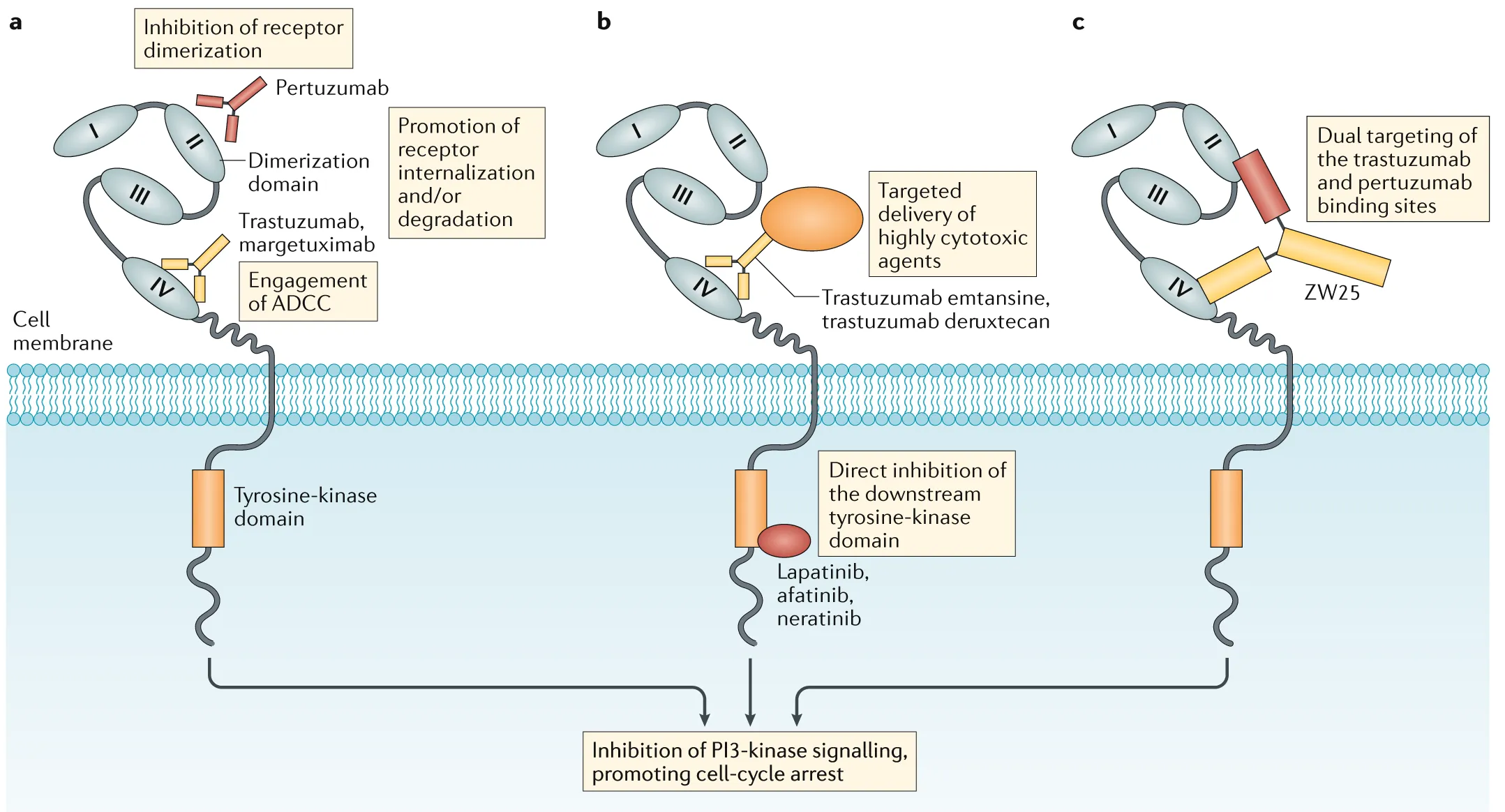
Figure 1. Mechanism of action of agents targeting HER2.
Trastuzumab is a humanized IgG1 monoclonal antibody that binds to subdomain IV of the HER2 extracellular domain. Its antitumor activity is mediated through multiple mechanisms:
Inhibition of HER2-driven signaling
Binding of trastuzumab disrupts receptor dimerization within the HER family, resulting in suppression of key downstream pathways, including PI3K/Akt/mTOR and Ras/Raf/MAPK. This leads to reduced proliferation and induction of apoptosis in HER2-amplified cells. This mechanism also serves as a central functional readout in cell-based assays evaluating anti-HER2 antibodies.
Fc-mediated immune effector functions
The Fc region of trastuzumab engages FcγRIIIa on NK cells, triggering robust antibody-dependent cellular cytotoxicity (ADCC). Additionally, activation of the classical complement pathway contributes to complement-dependent cytotoxicity (CDC).
Additional mechanisms
These include inhibition of HER2 extracellular domain shedding, promotion of receptor internalization and degradation, and induction of G1 cell cycle arrest.
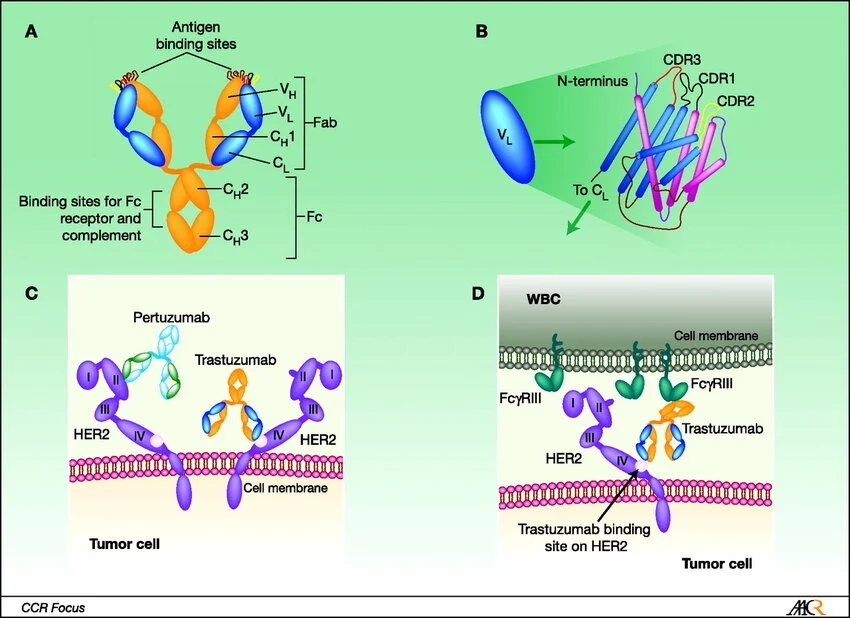
Figure 2. Trastuzumab schematic structure
2. Contributions of Trastuzumab to Antibody Therapeutics Research
Over the past two decades, systematic research centered on trastuzumab has not only validated HER2 as a druggable target but also significantly shaped the broader framework of antibody drug development.
Establishment of humanized antibody development paradigms
As one of the earliest widely used humanized antibodies, trastuzumab employed a CDR grafting strategy combined with human framework substitution, effectively reducing immunogenicity. This design approach laid the groundwork for subsequent humanized and fully human antibody development. In parallel, studies on immunogenicity assessment, in vitro/in vivo activity comparison, and pharmacokinetics helped define standardized preclinical evaluation workflows.
Standardization of functional evaluation systems
At the cellular level, trastuzumab-based assays—such as HER2-positive cell proliferation inhibition, binding affinity measurement, and ADCC/CDC activity assays—have become widely adopted platforms for antibody characterization.
At the in vivo level, HER2-amplified xenograft models (established with HER2-overexpressing cell lines) have provided standardized approaches for efficacy evaluation and tissue distribution analysis. Today, trastuzumab is routinely used as a benchmark positive control in anti-HER2 antibody development.
Advancing research on resistance mechanisms
Extensive investigation into both primary and acquired resistance to trastuzumab has identified multiple mechanisms, including HER2 structural alterations, aberrant activation of downstream signaling pathways, compensatory bypass signaling, and immunosuppressive tumor microenvironments. These insights have provided critical theoretical foundations for next-generation antibody design and resistance-targeting strategies. Corresponding resistant cell lines and animal models have also become essential tools in oncology research.
3. Current Knowledge Gaps and Research Directions
Despite significant progress, several key scientific questions remain unresolved and continue to drive ongoing research:
Predictive biomarkers
To date, no biomarker beyond HER2 overexpression/amplification has been prospectively validated for predicting trastuzumab response. Candidate biomarkers—including ESR1 expression, stromal tumor-infiltrating lymphocytes (sTILs), PIK3CA/PTEN mutations, and circulating tumor DNA (ctDNA)—have shown inconsistent results and lack robust clinical validation.
Antibody engineering optimization
Key areas of active research include Fc glycoengineering, affinity maturation, bispecific antibody design, and the development of antibody-drug conjugate (ADC) platforms derived from trastuzumab scaffolds.
Deeper understanding of resistance biology
While much work has focused on tumor-intrinsic mechanisms, resistance driven by the tumor microenvironment, clonal evolution, and epithelial–mesenchymal transition (EMT) remains insufficiently characterized and represents an important frontier.
4. Scientific Insights from Two Decades of Trastuzumab
The development trajectory of trastuzumab illustrates a clear evolution—from target discovery to therapeutic validation, and ultimately to the establishment of a comprehensive antibody research ecosystem.
Beyond its transformative impact on clinical outcomes in HER2-positive breast cancer, trastuzumab has played a pivotal role in shaping antibody engineering strategies, standardizing functional assay systems, and advancing mechanistic understanding of targeted therapy resistance.
As such, trastuzumab is not only a milestone therapeutic agent but also a foundational reference framework for modern antibody-based research.
5. abinScience Trastuzumab-Related Products
| Product Type |
Product Name |
Catalog No. |
| Antibody |
Research Grade Trastuzumab |
HY286016 |
| Research Grade Timigutuzumab |
HY286056 |
| Anti-Trastuzumab Polyclonal Antibody |
AY286014 |
| Anti-Trastuzumab Idiotypic Antibody (1HE) |
AY286013 |
| Anti-Trastuzumab Idiotypic Antibody (SAA2113) |
AY286023 |
| Anti-Trastuzumab Idiotypic Antibody (SAA2114) |
AY286033 |
| Anti-Trastuzumab Non-Neutralizing Antibody (SAA2623) |
AY286153 |
| Anti-Trastuzumab Non-Neutralizing Antibody (SAA2624) |
AY286163 |
| Anti-Trastuzumab Non-Neutralizing Antibody (SAA2625) |
AY286173 |
| Anti-Trastuzumab Non-Neutralizing Antibody (SAA2626) |
AY286183 |
| ELISA Kit |
Trastuzumab ELISA Kit |
DY286038 |
| Anti-Trastuzumab ELISA Kit |
AY286018 |
abinScience offers a comprehensive portfolio of trastuzumab-related research biosimilars and analytical tools,For more information on Research Biosimilar, please email us at: [email protected]
References
[1] Gentile G, Gerosa R, de Azambuja E, Piccart-Gebhart M. 20th anniversary of adjuvant trastuzumab: reflections on a breakthrough moment. Ann Oncol. 2026 Apr;37(4):470-480. doi: 10.1016/j.annonc.2025.12.002. Epub 2025 Dec 11. PMID: 41386295.
[2] Oh DY, Bang YJ. HER2-targeted therapies - a role beyond breast cancer. Nat Rev Clin Oncol. 2020 Jan;17(1):33-48. doi: 10.1038/s41571-019-0268-3. Epub 2019 Sep 23. PMID: 31548601.
[3] Pohlmann PR, Mayer IA, Mernaugh R. Resistance to Trastuzumab in Breast Cancer. Clin Cancer Res. 2009 Dec 15;15(24):7479-7491. doi: 10.1158/1078-0432.CCR-09-0636. PMID: 20008848; PMCID: PMC3471537.
[4] Wang J, Huang Q, Hu X, Zhang S, Jiang Y, Yao G, Hu K, Xu X, Liang B, Wu Q, Ma Z, Wang Y, Wang C, Wu Z, Rong X, Liao W, Shi M. Disrupting Circadian Rhythm via the PER1-HK2 Axis Reverses Trastuzumab Resistance in Gastric Cancer. Cancer Res. 2022 Apr 15;82(8):1503-1517. doi: 10.1158/0008-5472.CAN-21-1820. PMID: 35255118; PMCID: PMC9662874.
[5] The Lancet. Trastuzumab emtansine and cost-based decision making. Lancet. 2017 Jan 7;389(10064):2. doi: 10.1016/S0140-6736(17)30006-5. Epub 2017 Jan 6. Erratum in: Lancet. 2017 Jan 21;389(10066):254. doi: 10.1016/S0140-6736(17)30042-9. PMID: 28091366.
For Research Use Only. Not for use in diagnostic or therapeutic procedures.


 中文
中文 English
 한국어
한국어 日本語
日本語 Español
 Français
 Русский


