In life sciences and biomedical research, antibodies serve two distinct roles: as analytical tools to detect molecular expression and cellular phenotypes, and as functional interventions to modulate immune processes invivo. Unlike conventional in vitro assays, invivo functional antibody studies evaluate the complete biological response after systemic administration. This includes both specific actions—such as blocking signaling pathways or modulating target cell functions—and potential confounding effects, including Fc-mediated immune engagement and formulation-related non-specific reactions.
A major challenge in invivo experiments is that observed phenotypic changes do not automatically reflect target-specific inhibition. Relying solely on a two-arm comparison between a disease model group and an antibody-treated group often leads researchers to misidentify operational stress or non-specific antibody effects as specific target modulation. Establishing a rigorous control framework—especially through the rational selection of isotype controls—is therefore essential for generating reliable, interpretable data.
1. Confounding Factors in InVivo Antibody Response Interpretation
Antibody administration produces multi-layered, overlapping biological responses invivo. Identifying these factors is crucial for designing proper controls and accurately interpreting experimental outcomes.
1.1 Target-Mediated Specific Effects
Antigen binding initiates functional antibody activity, but binding alone does not equal target inhibition. Depending on epitope specificity, binding affinity, and target biology, antibodies can block ligand receptor interactions, alter receptor conformations, disrupt signaling complexes, or induce receptor clustering that paradoxically enhances downstream signaling. For membrane bound targets, antibody engagement can also trigger endocytosis, receptor redistribution, or accelerated degradation, indirectly altering cell function.
When target molecules regulate immune responses, these molecular changes downstream affect cell activation, proliferation, cytokine release, or immune cell recruitment into tissues. However, these cellular responses are not definitive proof of target specific inhibition. For example, a post treatment drop in serum cytokine levels could stem from target pathway suppression, a reduction in absolute immune cell counts, or a systemic shift in inflammatory status. Defining the precise mechanism of action requires integrating molecular, cellular, and tissue level endpoints.
1.2 Fc Region Mediated Immune Effector Functions
Antibodies with active Fc domains interact with cell surface Fc receptors (FcRs), driving distinct immune responses based on receptor expression, cell type, and antibody subclass. Fc engagement can induce antibody dependent cellular cytotoxicity (ADCC) or antibody dependent cellular phagocytosis (ADCP), while also modulating general inflammatory pathways. The local balance between activating and inhibitory FcRs ultimately determines the direction and intensity of this response.
Consequently, antibodies targeting surface antigens can alter target and bystander immune cells through Fc dependent pathways, even when antigen specificity is high. For instance, a decrease in target cells could reflect either direct functional blockade or FcR mediated cell depletion. Without measuring absolute cell numbers, apoptosis, or clearance markers alongside cell percentages, distinguishing between target blockade and cell depletion becomes impossible.
1.3 Non Specific Operational and Vehicle Factors
Beyond target and Fc interactions, systemic antibody administration introduces non specific variables. Foreign protein administration, injection routes, dosing volumes, and handling stress can alter host physiology and trigger transient inflammatory responses.
These non specific variables cannot be parsed using single endpoint readouts alone. Fluctuations in circulating cytokines, for example, may reflect target pathway modulation, vehicle induced inflammation, or normal physiological variance among individual animals. Without a dedicated control group reflecting the baseline impact of antibody administration, attributing observed phenotypes directly to functional target intervention remains ungrounded.
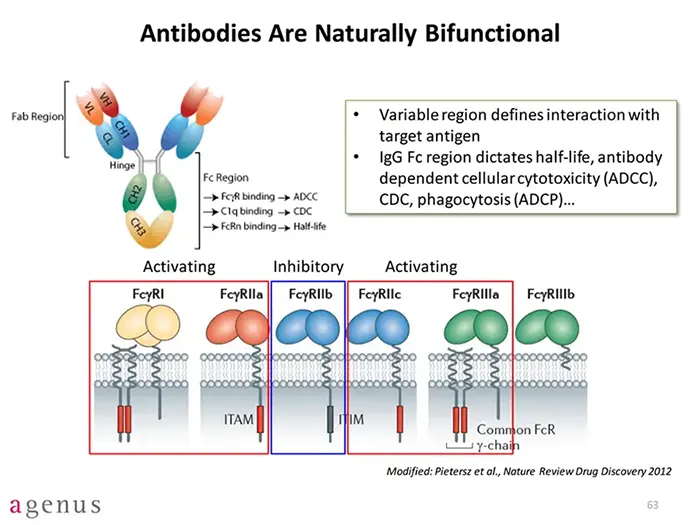
Figure 1: Biological factors contributing to multi faceted antibody responses invivo
2. Core Functions and Applications of Isotype Controls
An isotype control antibody matches the structural profile of the primary antibody without binding the target antigen. It serves as a benchmark to distinguish target specific phenotypes from non specific background responses induced by antibody administration.
2.1 Establishing a Rigorous Baseline for Antibody Administration
Compared to untreated or vehicle only model controls, isotype controls provide a benchmark that accounts for the physical and biological presence of an antibody. Untreated model groups only highlight differences between having or lacking disease/treatment, whereas isotype controls capture antibody driven structural effects, Fc receptor engagement, and vehicle background influence.
In tumor microenvironment studies, for example, comparing a target antibody group directly against an untreated model group leaves it unclear whether altered immune cell profiles result from target pathway blockade, non specific Fc FcR binding, or residual endotoxins in the formulation. Including an isotype control establishes two informative comparisons: comparing the target group against the isotype control isolates target specific activity above antibody background, while comparing the isotype control against the model group quantifies baseline antibody treatment effects.
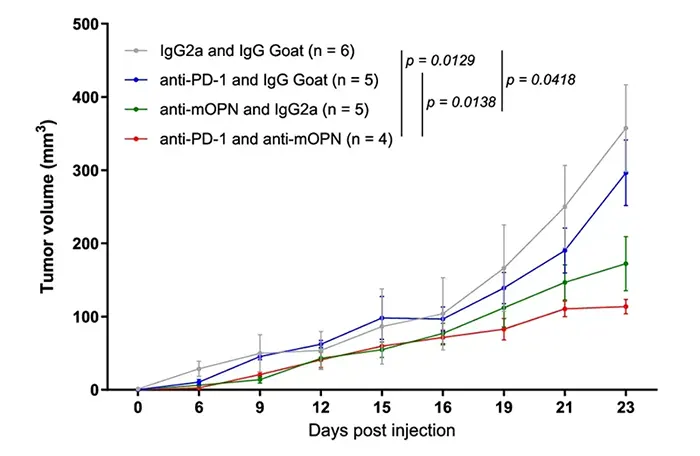
Figure 2: Application of isotype controls in invivo antibody intervention studies (DOI: 10.1038/s41467 024 53023 9)
2.2 Operational Scope and Technical Limitations
Isotype controls establish a comparative benchmark; they do not directly prove a molecular mechanism. Their validity relies on matching key physical properties with the target antibody while lacking target specificity.
However, even when sharing identical immunoglobulin subclasses, antibodies differ in variable region sequences, surface charge distribution, aggregation tendencies, and non specific binding affinities. As a result, an isotype control cannot fully replicate the invivo pharmacokinetics or local behavior of the target antibody. This distinction is critical in Fc dependent mechanism studies: upon binding target antigens on cell membranes, target antibodies undergo conformational or density changes that alter FcR cross linking—a process soluble, non binding isotype controls cannot mimic.
Therefore, isotype controls primarily serve to monitor background treatment variables and provide a baseline for mechanistic studies. They cannot replace target expression profiling, target occupancy assays, or downstream signaling analyses, nor can they independently confirm a mechanism of action.
3. Selection Criteria for InVivo Isotype Controls
Selecting an isotype control requires looking beyond target non reactivity. Researchers should evaluate host species matching, subclass alignment, and preparation quality to ensure valid comparisons between experimental groups.
3.1 Matching Host Species and Immunoglobulin Subclass
Matching the host species and exact immunoglobulin subclass is the baseline requirement for isotype control selection. Subclasses vary significantly in FcR binding affinities, effector capabilities, and InVivo half lives. Mismatches in these structural parameters introduce confounding variables that mask true target mediated effects.
Selection should align host origin, heavy and light chain subclasses, and Fc domain features. For engineered antibodies (such as aglycosylated or mutated Fc variants), matching engineered isotype controls must be used instead of wild type alternatives.
Common Pitfall: Treating all IgG molecules as interchangeable controls. Human IgG subclasses (IgG1, IgG2, IgG4) and mouse subclasses (IgG1, IgG2a, IgG2b) possess distinct FcR affinity profiles and effector functions. Broad category matching alone is insufficient.
3.2 Aligning with Host Animal Immune Profiles
Antibody mediated effector functions depend on the host animal's immune background. Species differ in FcR expression patterns, cellular distribution, and subclass binding affinities, which directly influence antibody clearance rates and biological activity. Experimental results from one species model cannot be directly assumed for another.
Selecting isotype controls requires evaluating how the antibody's Fc region interacts with the host animal's FcRs. When testing human antibodies in mouse models, using a human IgG1 isotype control alongside a human IgG1 target antibody is not automatically valid without verifying cross species FcR interaction profiles and confirming that the control models non target baseline effects.
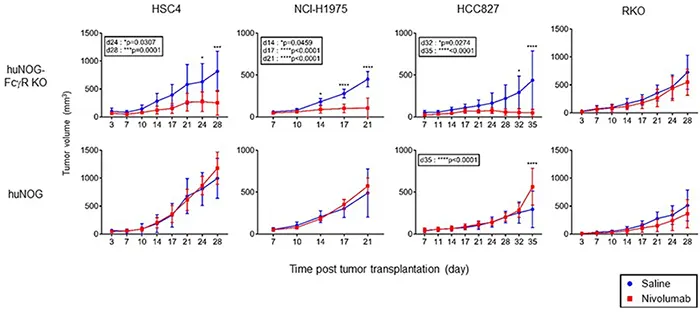
Figure 3: Anti tumor efficacy of nivolumab across different humanized mouse models and Fc receptor engagement impact (DOI: 10.1038/s41598 021 00641 8)
3.3 Tailoring Control Frameworks to Research Questions
Control selection should align with the core research question rather than relying on standardized templates. Studies investigating pathway blockade should focus on target occupancy and downstream signaling readouts, using controls to exclude non target variables. Studies investigating antibody mediated cell depletion require tracking cell counts, apoptosis markers, and effector cell involvement to differentiate signal inhibition from physical depletion.
When evaluating broad immune responses or complex disease phenotypes, a single control group may not resolve all variables. Untreated model groups help monitor disease progression and general intervention impacts, while isotype controls account for antibody specific background effects. Because each control answers a distinct question, control selection should reflect research hypotheses, model complexity, and primary endpoints.
4. Comprehensive Strategies for InVivo Functional Antibody Research
Rigorous InVivo functional antibody studies rely on building a complete chain of evidence connecting antibody intervention to biological outcomes. Isotype controls provide the baseline for this chain, eliminating background noise and refining mechanistic interpretations.
Combining isotype controls with multi layered readouts and target validation strategies—such as knockout models, orthogonal interventions, and Fc engineering analyses—allows researchers to differentiate correlation from causation, enhancing study reproducibility and confidence. In functional antibody research, rigorous control design is an integral component of mechanistic discovery.
abinScience InVivo Isotype Control Antibodies
Appropriate isotype controls form the foundation for reliable comparative analysis in InVivo antibody studies. To meet stringent requirements for subclass matching, host species compatibility, and InVivo grade purity, abinScience provides high quality InVivo Plus Isotype Control Antibodies to support experimental control design.
InVivo Plus Isotype Control Antibodies
| Catalog No. |
Product Name |
| HV080207 |
Human IgG1 Recombinant Isotype Control Antibody (REA293) |
| HV080023 |
Human IgG1 (Fab His) Recombinant Isotype Control Antibody (HyHEL 10) |
| MF533507 |
Mouse IgG2a, kappa Recombinant Isotype Control Antibody (MOPC 173) |
| HP298107 |
Human IgG4 (S228P) Recombinant Isotype Control Antibody (SAA0184) |
| HP614107 |
Human IgG4 (S228P & L235E) Recombinant Isotype Control Antibody (HyHEL 10) |
| HV069207 |
Human IgA2, lambda Isotype Control antibody (13R4) |
| HP688307 |
Human IgG1 (LALAPG) Recombinant Isotype Control Antibody (HyHEL 10) |
| HV080213 |
Human IgG1 (L234A/L235A/G237A), kappa Recombinant Isotype Control Antibody (HyHEL 10) |
| HP473023 |
IgG Format Isotype Control for Bispecific Reference Antibody |
| HV080073 |
Human IgG1 (S239D/A330L/I332E), kappa Recombinant Isotype Control Antibody (HyHEL 10) |
| HP688207 |
Human IgG1 (LALA P329G) lambda Recombinant Isotype Control Antibody (13R4) |
| RF974109 |
InVivo Plus Rat IgG2b Isotype Control (LTF 2) |
| MV080707 |
Mouse IgG1, kappa (Silence) Recombinant Isotype Control Antibody (MOPC 21) |
Browse More InVivo Isotype Control Antibodies
References
- [1] Agenus. (2015, May 14). Agenus R&D Day: Driving the immune system to fight cancer and infectious disease. U.S. Securities and Exchange Commission. https://www.sec.gov/Archives/edgar/data/1098972/000119312515186774/d925979dex991.htm
- [2] Hogarth, P. M., & Pietersz, G. A. (2012). Fc receptor targeted therapies for the treatment of inflammation, cancer and beyond. Nature reviews. Drug discovery, 11(4), 311 331. https://doi.org/10.1038/nrd2909
- [3] Katano, I., Hanazawa, A., Otsuka, I., Yamaguchi, T., Mochizuki, M., Kawai, K., Ito, R., Goto, M., Kagawa, T., & Takahashi, T. (2021). Development of a novel humanized mouse model for improved evaluation of in vivo anti cancer effects of anti PD 1 antibody. Scientific reports, 11(1), 21087. https://doi.org/10.1038/s41598 021 00641 8
- [4] Gu, Y., Taifour, T., Bui, T., Zuo, D., Pacis, A., Poirier, A., Attalla, S., Fortier, A. M., Sanguin Gendreau, V., Pan, T. C., Papavasiliou, V., Lin, N. U., Hughes, M. E., Smith, K., Park, M., Tremblay, M. L., Chodosh, L. A., Jeselsohn, R., & Muller, W. J. (2024). Osteopontin is a therapeutic target that drives breast cancer recurrence. Nature communications, 15(1), 9174. https://doi.org/10.1038/s41467 024 53023 9


 中文
 English
 한국어
 日本語
 Español
 Français
 Русский


